
Danbury Municipal Court Warrants
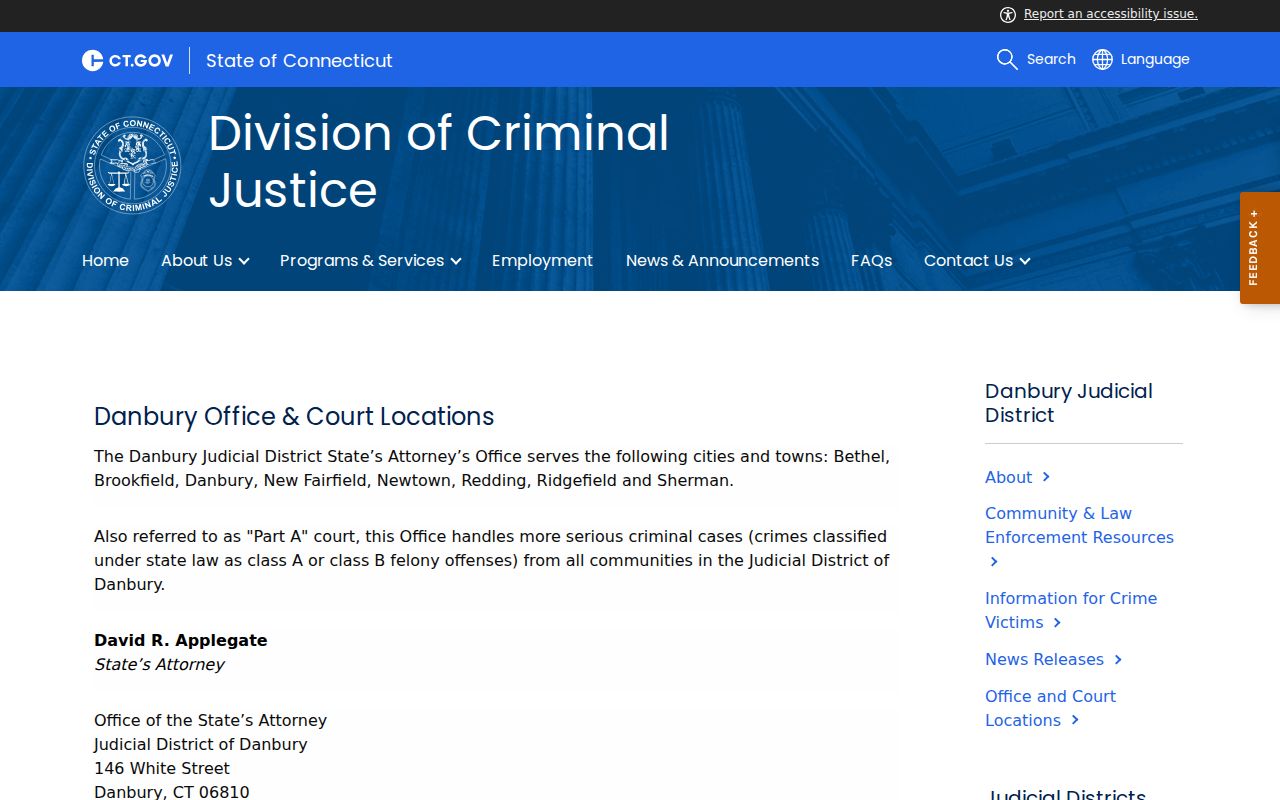
The key local fact is negative but useful: Danbury does not operate a city criminal court that issues its own criminal warrants. Connecticut Superior Court is the trial court. At 146 White Street, the Danbury Judicial District and GA3 functions share a state courthouse. Part A handles serious criminal cases, while GA3 Part B handles specified felonies, misdemeanors, infractions, and motor-vehicle matters.
Connecticut also has no Danbury county government or county sheriff warrant desk. Danbury Police is a city agency, but police activity and records do not turn City Hall into a courthouse. A person who starts with the wrong meaning of “municipal” can waste time at the Town Clerk, a local ticket appeal office, or a police tip channel that cannot confirm a court warrant.
Two State Court Divisions at White Street
Danbury court questions converge at 146 White Street, but the division still matters. The current directory gives 203-207-8600 as the general clerk number. It also lists bail/pretrial at 203-207-8715, the Public Defender at 203-207-8650, the Court Service Center at 203-207-8766, the Judicial Marshal office at 203-207-8611, and the State’s Attorney at 203-207-8670.
The Court Service Center can help with forms and procedure but does not give legal representation. The Public Defender is a legal-service route for eligible defendants. A current clerk or counsel should identify which division owns a docket before anyone travels or assumes that a city office can change the warrant.
Danbury Cities With Municipal Courts
There is only one city in this city-profile project, and its criminal docket is state-run. The table names the local institutions people commonly confuse. It does not imply that any of them is a city criminal court.
| City | Court | What It Handles |
|---|---|---|
| Danbury | No municipal criminal court | Criminal, infraction, and motor-vehicle court matters route to Connecticut Superior Court GA3/JD |
| Danbury | Town Clerk | Municipal public records and certified copies, not criminal warrant status |
| Danbury | Ticket Hearing Officer | Specified local ticket appeals, not criminal warrants or state traffic cases |
| Danbury | Police Records and Property | Police-held records, incident and accident reports, subject to access limits |
Town Clerk Is Not the Warrant Clerk
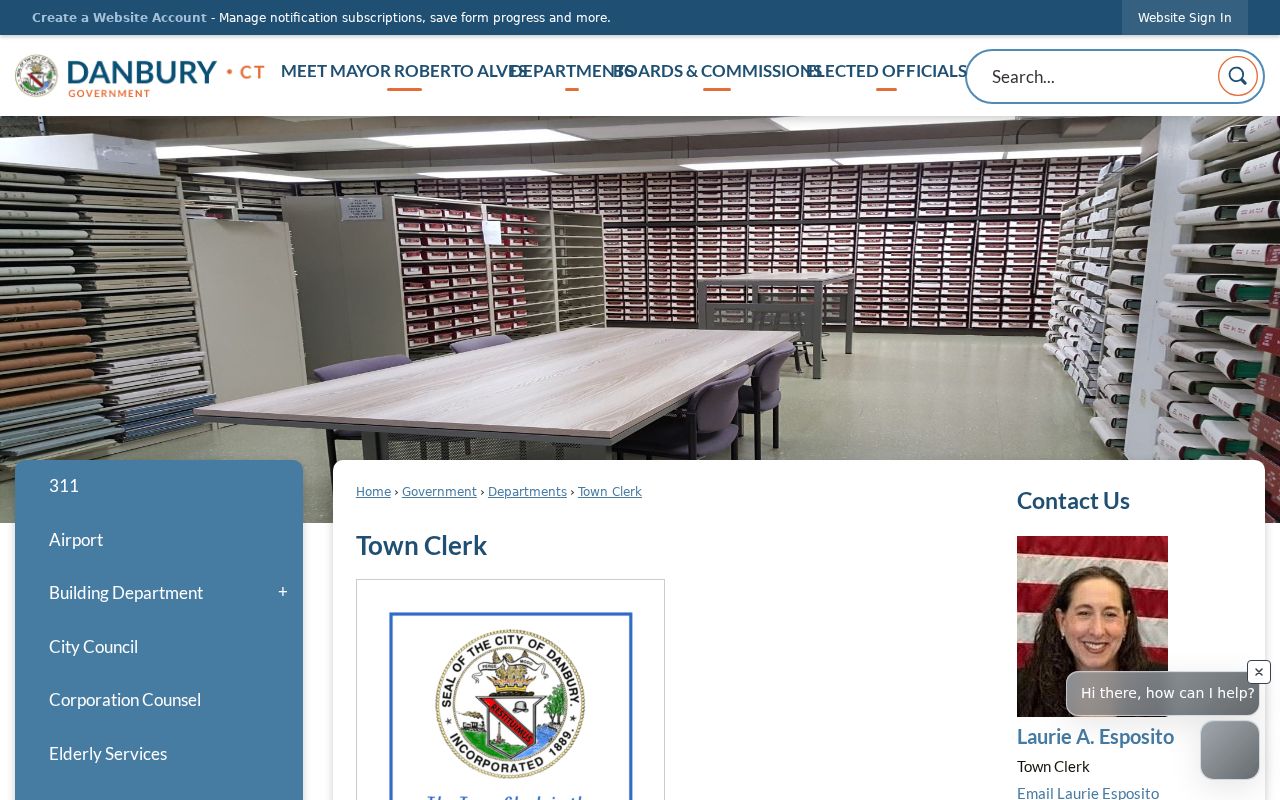
Danbury Town Clerk at 155 Deer Hill Avenue maintains city records and certified copies. The office’s published phone is 203-797-4531. That makes it appropriate for a municipal-record question, but not for confirming a Superior Court warrant. The shared word “clerk” is the source of the confusion: criminal case questions belong to the state courthouse clerk.
Five elected constables and any appointed special constables may have process-service roles, yet the city pages do not provide a public warrant database through them. Service authority should not be mistaken for authority to publish, issue, cancel, or confirm every criminal warrant.
Checking a Municipal Court Warrant
Because no Danbury municipal criminal portal exists, identify the record category first. Use a docket or citation number whenever available. The Judicial Branch public warrant page is limited, and its current notice says FTA warrants will not be displayed until further notice, so a blank result is not clearance.
- For a court warrant, use the Judicial Branch public search and criminal case lookup, selecting Danbury GA 3 or Danbury JD only when appropriate.
- For a ticket, use CIB with the ticket number, check digit, and first three surname or company letters.
- Call the Superior Court clerk at 203-207-8600 for docket status. For a specific police-held record, call DPD Records at 203-797-4679.
- If an in-person appearance is required, confirm the destination and hours before going to 146 White Street, and consult counsel about resolution.
Civil Capias Is a Separate Process
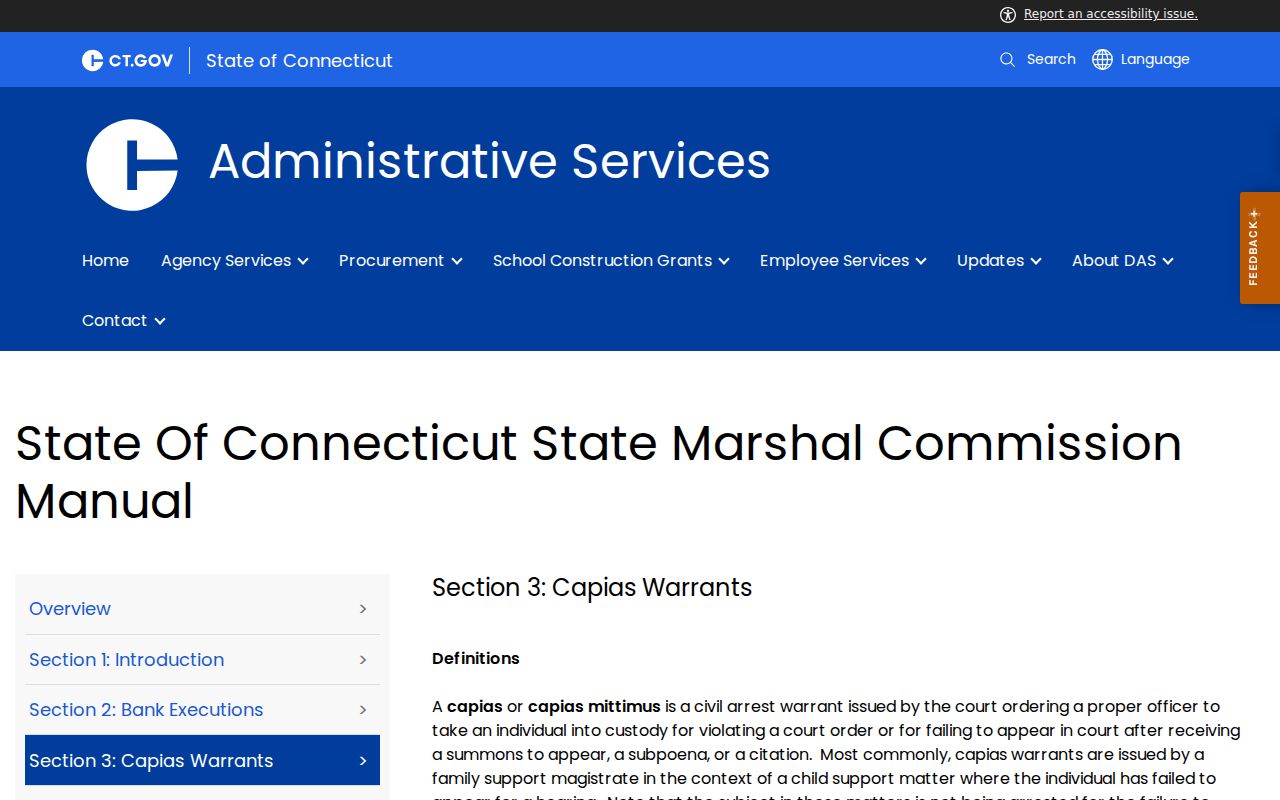
A Connecticut capias or capias mittimus can be a civil arrest warrant directing an officer to take a person into custody for violating a court order or failing to appear after a summons, subpoena, or citation. The State Marshal Commission manual says much of state-marshal capias work concerns family-support-magistrate child-support matters. A state marshal may execute a capias statewide, but is not a replacement for a county sheriff.
The issuing family-support or civil court controls that process. Calling the city Town Clerk or using CIB will not resolve it. Identify the order, docket, court, and marshal before deciding which office can answer a status question.
Bench Warrants Come From Superior Court
Connecticut General Statutes §54-2a authorizes a Superior Court judge or judge trial referee to issue a bench warrant on a prosecutor’s application supported by an affidavit showing probable cause. It also addresses process for a defendant or witness who violates an order to appear. This is judicial authority, not a power exercised by Danbury’s Town Clerk or Ticket Hearing Officer.
If an arrest occurs on a Superior Court bench warrant, §54-64b describes presentation without undue delay to the geographical-area clerk during office hours, or to a community correctional center after hours when its conditions apply. The clerk advises rights and sets release conditions. That statute does not establish a Danbury police-station bond window or guarantee release, so exact directions should come from the court, arresting agency, or counsel.
Inside a Municipal Court Warrant
Danbury has no municipal criminal-warrant format, so no city cause-number pattern should be invented. The useful fields below belong to the actual state court, ticket, civil, or police record. Their source determines what the status means.
| Warrant / Cause Number | Use the documented court docket or ticket number, not a made-up municipal identifier. |
|---|---|
| Charge / Offense | The court or citation states the underlying criminal, motor-vehicle, infraction, or civil matter. |
| Issuing Court | Connecticut Superior Court or the identified civil/family-support court, not Danbury City Hall. |
| Bond / Fine Amount | Case-specific and subject to the court order; verify it directly. |
| Status | Public interfaces can be incomplete or delayed; the issuing court confirms current status. |
Local Ticket Appeals Are Not Criminal Cases
Danbury’s Ticket Hearing Officer form asks for a citation or ticket number, issuer, date and street, vehicle plate and state, and the grounds for appeal. It supplies a city appeal route and email. Those fields can look court-like, but the process concerns local ticket administration. It is not proof of a municipal criminal court, and it does not cancel a Superior Court warrant.
A Connecticut traffic or infraction ticket follows CIB and, when transferred based on the issuing town, Danbury GA3. Keeping these tracks separate prevents a payment, appeal, or inquiry from reaching an office that cannot update the controlling docket.
How to Resolve a Municipal Court Warrant
The practical answer is to resolve the correctly identified state or civil process. No Danbury municipal judge can recall a criminal warrant because no municipal criminal court exists. The research found no Danbury-specific surrender hours, universal bond schedule, or guaranteed same-day process.
- Identify the docket, warrant category, issuing court, and responsible agency.
- Ask the issuing court what appearance, motion, surrender, payment, or bond procedure applies.
- Consult a lawyer or the Public Defender if eligible before making legal decisions.
- After completing the required process, confirm that the court updated the warrant and any related hold.
Warning: A payment, City Hall visit, or blank online result does not recall a state court warrant. Obtain confirmation from the issuing court.