
Danbury Bench Warrants Explained
In Danbury, a bench warrant is an arrest order that comes straight from Connecticut Superior Court. Under Connecticut General Statutes §54-2a, a judge, a judge trial referee, or the Superior Court itself may issue one after a prosecutor files an application and an affidavit showing probable cause. The same statute allows process when a defendant or witness ignores an order to appear. A computer record counts as prima facie evidence of issuance, meaning it serves as initial legal proof, and the statute directs that the arrested person get a copy. The label "bench warrant" tells you where the order came from, not that Danbury keeps some separate police list. A failure to appear is one common basis. A VOP involves an alleged probation violation, an OTI is an order to incarcerate, and a civil capias or capias mittimus grows out of civil or family-support enforcement, so none of those should be mislabeled as a criminal bench warrant. The official statute source sets out all of these issuing rules in full.
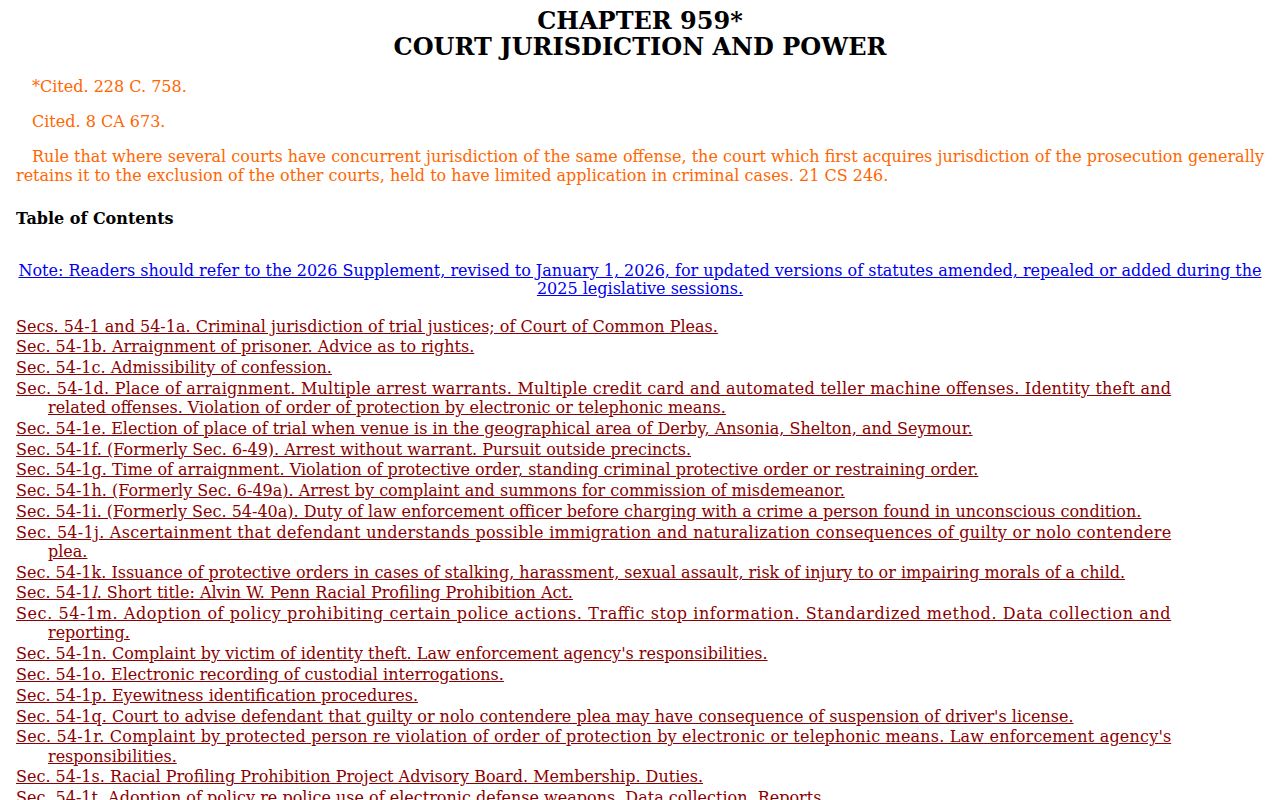
The distinction matters because a Danbury judicial arrest order and a general police-record request follow two different tracks.
Danbury Portal Limits Matter
Begin with the Judicial Branch public warrant search, but know its limits. The portal has warned that failure-to-appear warrants would not display until further notice, and it says plainly that not all warrant types appear. You can search by last name, town, court location, first name, birth year, and year range; a surname needs at least two letters. Danbury GA 3 and Danbury JD are among the court-location choices.
No result is not clearance. The interface omits categories, and its current FTA suppression directly affects many bench-warrant questions.
A filter narrows results in Danbury; it proves nothing about identity, residence, or current status. PRAWN holds operational details for authorized justice agencies only, so the public cannot search that full system. Pair the limited portal with the criminal case lookup and a direct call to the clerk. The official FTA statistics source shows how Connecticut sorts its warrant categories.
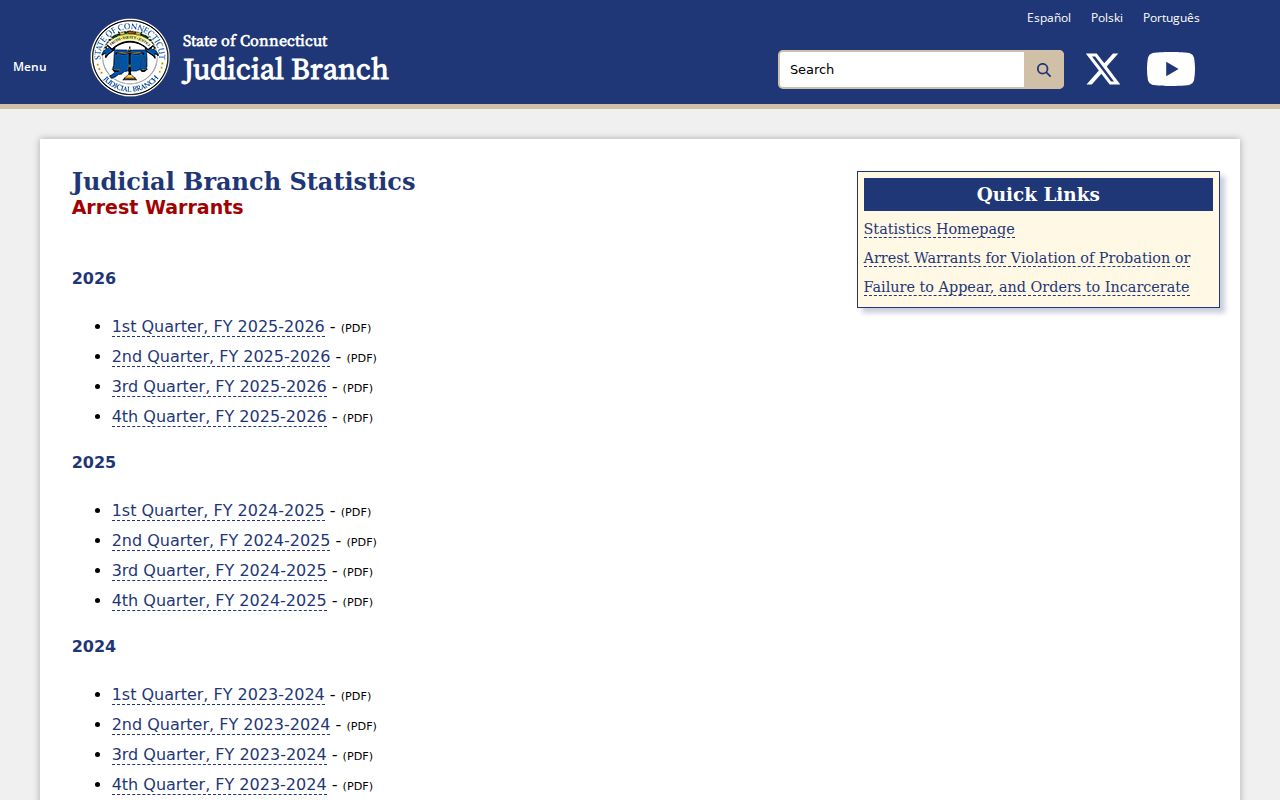
Its reports show aggregate workload, not a roster of people with Danbury warrants.
How Danbury Bench Warrants Are Issued
The path starts in court. A prosecutor may submit an application and affidavit, a judge reviews the grounds, and a judicial order authorizes arrest. A missed required appearance can also trigger FTA process. The docket and division matter far more than the broad phrase "Danbury warrant." Danbury has no municipal criminal court. The Connecticut Superior Court Judicial District of Danbury handles serious Part A matters, while Geographical Area No. 3, at the same courthouse, handles Part B cases including class C, D, and E felonies, misdemeanors, infractions, and motor-vehicle matters. Danbury Police may encounter or serve the order, but City Hall never issues it.
Court duty or sworn application → judicial review → warrant issued → agency confirmation and service → case returns to court. A web search sits outside that legal chain and cannot change the order.
Danbury Warrant Terms Decoded
Similar labels can lead to the wrong office. Connecticut sources keep these terms distinct.
- FTA
- Failure to appear, an arrest order tied to a missed criminal, motor-vehicle, or infraction court duty.
- VOP
- Violation of probation, based on an alleged breach of probation terms.
- OTI
- Order to incarcerate, a separate category in court materials.
- Capias
- A civil process writ often linked to family-support enforcement.
- Recall
- A court action withdrawing a warrant through the proper case process.
Ask the Danbury clerk to identify the category on a known docket before choosing a response. A search-result label is no substitute for the underlying order.
Bench Warrants and Arrest Warrants Compared
Both orders can put a person in custody in Danbury, but they start from different points, and the issuing court's record controls.
| Point | Bench Warrant | Arrest Warrant |
|---|---|---|
| Typical trigger | Missed court duty or appearance order | Sworn grounds alleging an offense |
| Issuer | Superior Court judicial officer | Court through authorized process |
| Public clue | Case lookup or limited portal | Portal, court file, or post-arrest record |
| Verification | Issuing clerk and counsel | Court or responsible police agency |
| Response | Appearance, surrender, motion, and bond directions | Surrender, booking, and release directions |
A summons tells the recipient to appear without ordering arrest first. Ignoring a Danbury summons may cause trouble later, yet a summons is not itself a warrant.
Danbury Court Contact Map
The right Danbury contact depends on the question you are asking. The court offices sit at 146 White Street, Danbury, CT 06810.
Superior Court Clerk
Start here for a known Danbury JD or GA3 docket, status, appearance route, and file location.
203-207-8600
Bail and Pretrial
Ask about case-specific release procedure. The warrant order controls the conditions.
203-207-8715
Public Defender
An eligible criminal defendant may seek representation through this office.
203-207-8650
Court Service Center
The center offers process and form navigation, but not legal advice.
203-207-8766
The Judicial Marshal office is 203-207-8611. The State's Attorney is 203-207-8670. Official publications have differed on some specialized numbers, so the general clerk line is the sound first call. The official Danbury court location source gives the courthouse context.
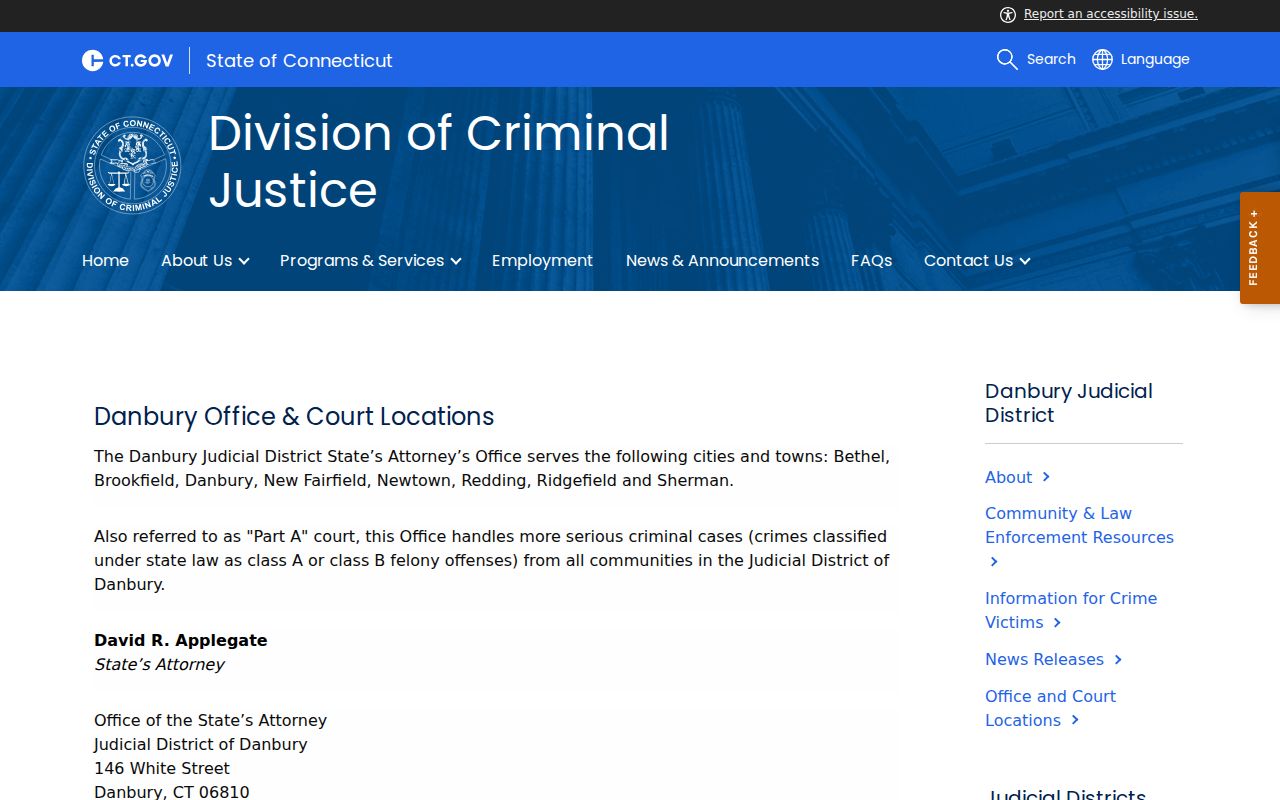
It confirms why a bench-warrant question belongs with state court, not a county office.
Resolving a Danbury Bench Warrant
First pin down the docket, warrant type, and controlling division. Then call the Danbury clerk and speak with a Connecticut criminal-defense lawyer or public defender if eligible. Ask which appearance, motion, surrender, or bond process applies. A relative may gather records and make calls, though an office can withhold protected details from a third party.
- Record the source, search date, category, and docket reference.
- Call 203-207-8600 and ask which division controls the file.
- Ask counsel about voluntary appearance, surrender, or a motion to recall or quash.
- Confirm the place, identification, hours, and release terms before travel.
- Keep receipts and court papers after any bond or appearance.
Section 54-64b governs what happens after an arrest on a Superior Court bench warrant. During office hours, the person goes without undue delay to the geographical-area clerk under the law's conditions. After hours, the statute points to a community correctional center. It gives no Danbury-specific after-hours address.
Act carefully: Call the court and obtain legal advice before appearing at a station; release and bond depend on the warrant order.
Danbury Bond Facts and Gaps
Danbury publishes no official bond schedule, station bond window, surrender hours, or guaranteed same-day clearing process. Practice Book §38-8 describes a qualifying 10 percent cash deposit for a surety bond not exceeding $20,000 unless the court orders otherwise. That is a general rule, not a quote for a specific file, and a Danbury warrant may carry cash, surety, nonfinancial, hold, or other terms. Confirm the amount, payment form, place, and hours with the clerk or the arresting agency. Posting payment does not always recall the warrant. The court may still require an appearance or a motion. A lost bond receipt follows a separate clerk process, which is one good reason to keep every receipt and docket detail. The official Connecticut bail chapter supplies the surrounding law.
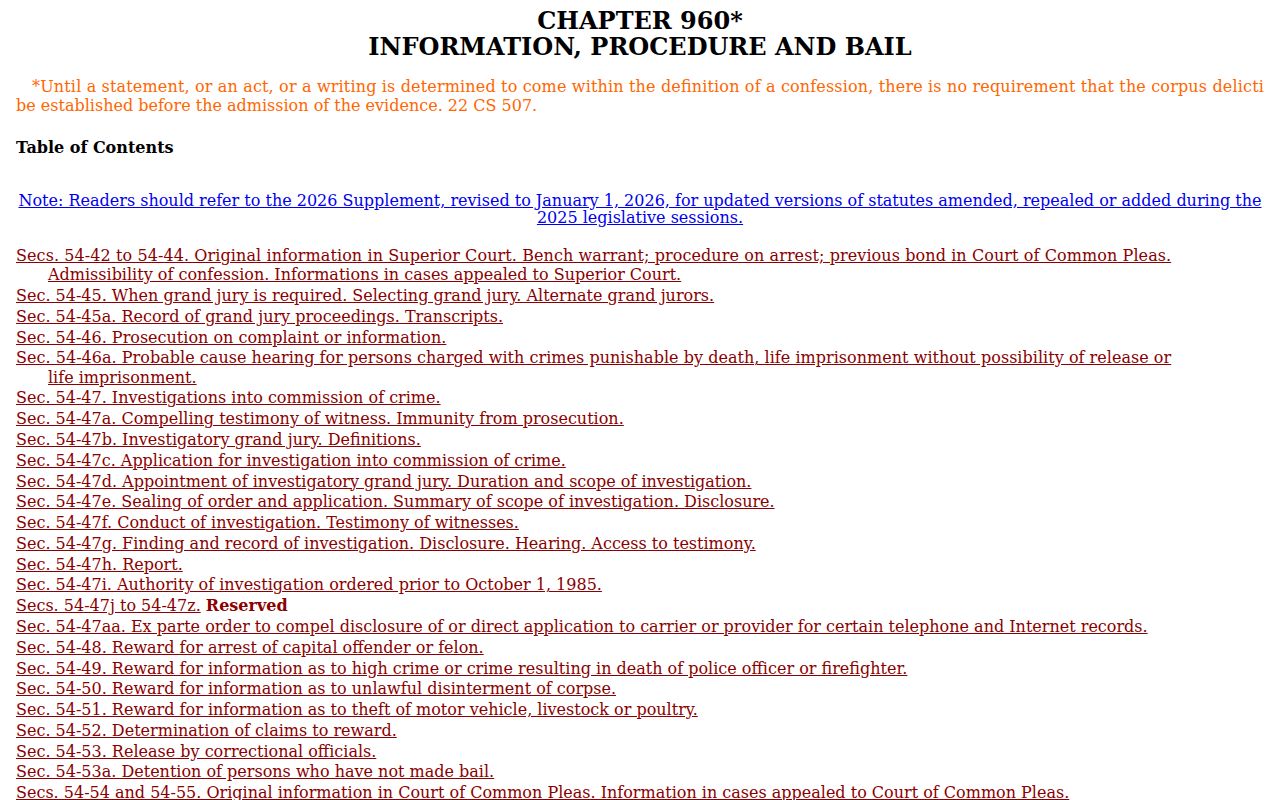
The case order remains more useful than a statewide rule read without the file.
Finding the Court That Issued the Warrant
Which court issued the warrant? Start there. Danbury GA 3 and Danbury JD help as filters once the venue is known. Bethel, Brookfield, New Fairfield, Newtown, Redding, Ridgefield, and Sherman all feed the same district. Keep in mind that a Danbury court label alone does not place the event inside city limits. The criminal case lookup can surface a docket and a courthouse, but its data may lag and is not the official record, so treat it as a clue. Ask whether a capias or capias mittimus applies in civil or family-support matters. Danbury police hold their own records; call Records and Property at 203-797-4679, or routine police at 203-797-4611. City Hall and the Town Clerk keep municipal records, not criminal warrants. Connecticut runs no county sheriff counter for Danbury. Federal matters go to the District of Connecticut instead.
Danbury No-Result Checklist
When the portal shows nothing, preserve that limited result and continue through official channels.
- Check criminal case lookup for a known name or docket.
- Call the Danbury clerk for a court file.
- Use DPD Records for a specific police record.
- Ask whether another court or category applies.
- Have counsel confirm the safe next step.
None of these confirms a Danbury warrant. That includes arrest logs. Aggregate statistics, City Hall files, and Tip 411 fall short too. Call 911 for any immediate threat. For ordinary questions, use the court, counsel, and records contacts, and never confront anyone over an online result. Note: Danbury portal notices and contacts can change, so save the check date and verify details with the issuing office.